
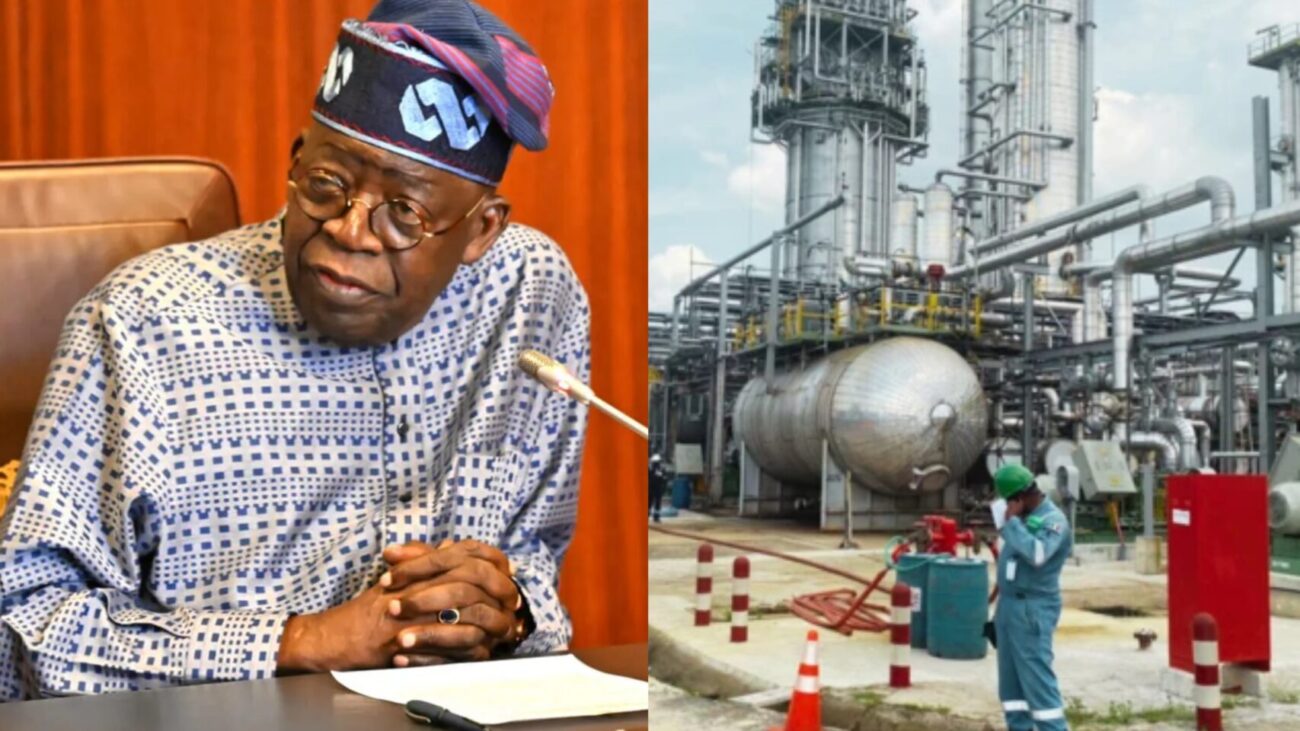
President Bola Ahmed Tinubu has assured petroleum workers that Nigeria’s largely inactive refineries will return to operation.
Tinubu gave the assurance on Thursday when he received the leadership of the Nigeria Union of Petroleum and Natural Gas Workers (NUPENG) at the Presidential Villa in Abuja.
Responding to the union’s concerns, he said flames or smoke at a refinery did not prove it was operating properly. He stressed that the facilities must be profitable and provide the value they were built to deliver.
“The refineries that you mentioned are going to come back to work,” he said.
Tinubu said he had taken responsibility for fixing the country’s assets and liabilities inherited from previous administrations.
“I’m not a man who will go there, come back and say everything is fine because I’ve accepted the assets and liabilities of my predecessors.
“No matter what has happened in the years past, it’s my responsibility now as the president to fix it, make it work for the largest common value of our population. I take responsibility for that, and I’m going to do it,” he said.
The president also defended his administration’s economic policies, saying regular salary payments had benefited workers, businesses and families.
He said funding had been secured for major infrastructure projects, including the Lagos-Ibadan, Abuja-Kaduna, Abuja-Kano and Sokoto-Badagry roads.
Tinubu urged NUPENG to ensure commuters benefit from Compressed Natural Gas (CNG), saying its gains had not spread as quickly as expected.
Earlier, NUPENG President Salimon Oladiti raised concerns over continued worker casualisation in the upstream oil and gas sector.
“We have engaged the management of some of the affected companies without results. Mr President, we urge you to use your good offices to stop casualisation of workers in our sector,” Oladiti said.
He also praised the administration’s road rehabilitation programme and efforts to revive the Warri and Port Harcourt refineries through partnerships with Chinese firms.
Oladiti urged the government to also revive decaying petroleum depots by handing them to private investors through an equity arrangement.
