
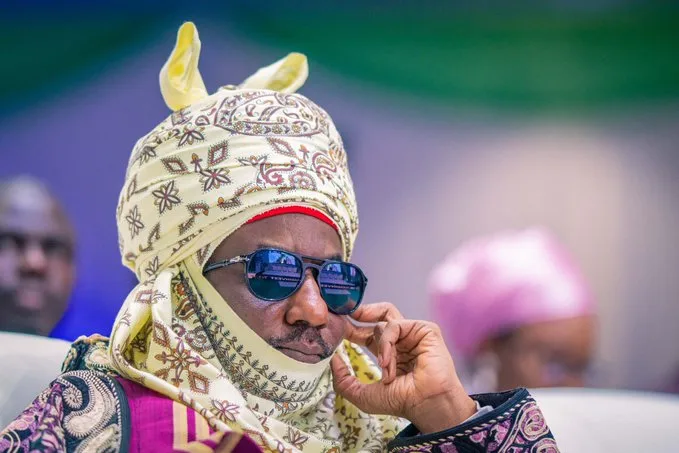
Former Central Bank of Nigeria Governor and Emir of Kano, Muhammadu Sanusi II, has admitted that he made a mistake by delaying the entry of telecom companies into Nigeria’s financial services sector.
Speaking at the launch of the Access to Financial Services in Nigeria 2026 Survey Report in Abuja on Wednesday, Sanusi said the decision was driven by fears over depositors’ money after the banking crisis. The fireside chat was moderated by Lagos Business School Dean, Prof. Olayinka David-West.
Looking back at his time as CBN governor from 2009 to 2014, Sanusi said, “I’m responsible for delaying the entry of telcos into this space.”
He said regulators were then worried about allowing firms they did not directly supervise to control large amounts of customers’ funds.
“Part of the challenge, of course, was that we had just come out of a banking crisis where we were worried about depositors’ funds. And I wasn’t comfortable allowing companies that I was not a primary regulator of to have access to a huge pool of funds,” he said.
Sanusi admitted, “So again, this is one case where you have a good intention, but you take a wrong decision.”
“I fought the World Bank. I fought everybody,” he said, adding, “I do think if I had allowed that to happen, it would have been much more progress.”
He said digital finance has shown that banks alone cannot reach everyone because of limited physical presence.
But Sanusi warned, “Opening an account, moving money, is not the same as earning money. It’s not the same as talking about poverty.”
He called for stronger links between financial services and agriculture, manufacturing, trade and other productive sectors.
Sanusi also suggested using digital payments to support savings for pensions and insurance, especially among informal workers.
He urged the CBN to keep fighting inflation, which he described as a major threat to savings and wealth.
Sanusi said Nigeria’s unified banking identification system now provides important infrastructure for expanding access to credit, insurance and pensions.
He also called for clearer roles among regulators when handling consumer complaints, warning that overlapping responsibilities could confuse customers and weaken trust in the financial system.
