
The Federal Government has given a newly inaugurated technical committee eight weeks to come up with practical steps to tackle Nigeria’s 2.2 million-tonne fish production deficit.
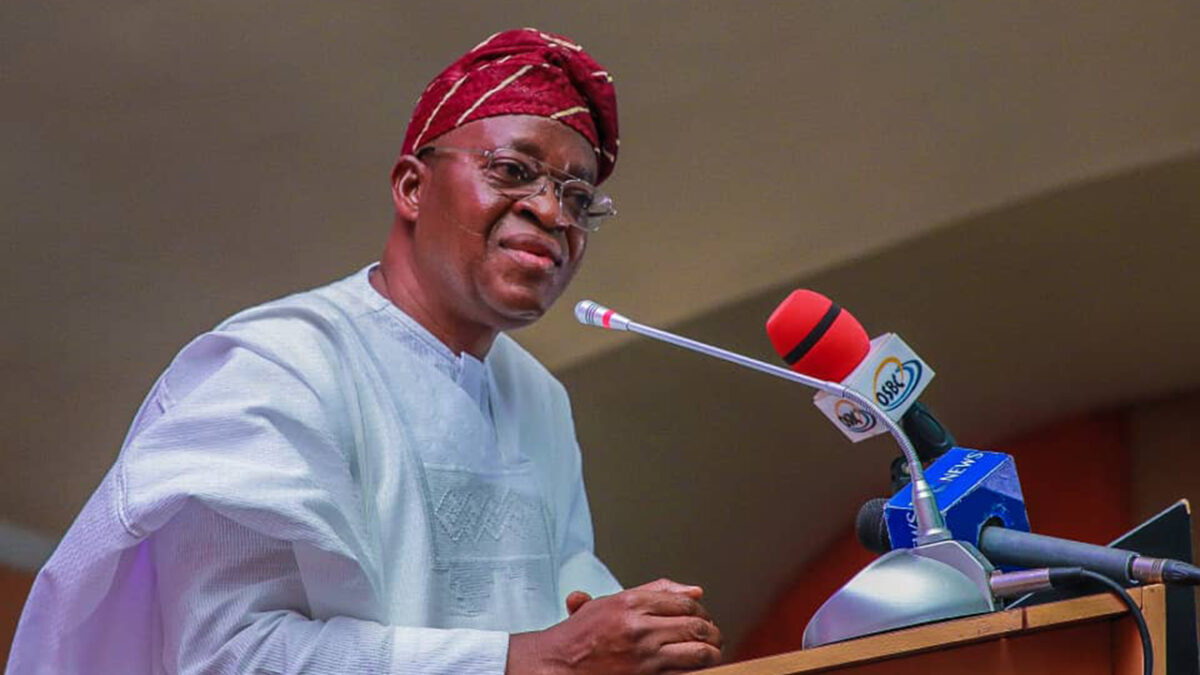
Minister of Marine and Blue Economy, Adegboyega Oyetola, gave the deadline on Thursday in Abuja while inaugurating the Technical Committee on Accelerating Fish Production in Nigeria.
Nigeria needs more than 3.6 million metric tonnes of fish yearly, but domestic production was 1.4 million metric tonnes in 2025, leaving a major supply gap.
Oyetola said the committee must turn recommendations from an October 2025 strategic roundtable into actions that will raise local production and reduce fish imports.
“The committee has been given eight weeks to move from recommendations to a practical implementation roadmap that addresses the major constraints limiting fish production and supply across Nigeria.
“We must identify interventions that can deliver measurable improvements in production, processing, storage and marketing, while creating opportunities for investment, job creation and stronger participation across the value chain.
“Nigeria cannot continue to depend heavily on imported fish when we have the resources and human capacity to expand domestic production and strengthen food security,” he said.
The minister listed high feed costs, poor access to quality fish seed and broodstock, weak fish health systems, post-harvest losses and poor cold-chain facilities among the major challenges.
Other concerns include limited access to affordable finance, research and innovation gaps, weak data systems, poor standards, traceability problems and inadequate market development.
Oyetola said moving fisheries and aquaculture functions to the ministry had created a stronger platform to address the issues.
He said the committee must review the roundtable proposals and decide which should be adopted, improved, added to existing plans, studied further or dropped as unworkable.
The committee was also asked to review existing public, private and development-sector initiatives to strengthen successful efforts and prevent duplication.
Its final report must include priority actions, responsible institutions, timelines, estimated costs, funding options, performance indicators and required approvals.
Permanent Secretary and committee chairman, Fatima Mahmood, said members would review the recommendations and work with government agencies, researchers, industry stakeholders and development partners.
Professor Akintola Latunji of Lagos State University also pledged the committee’s commitment to delivering its mandate.
The committee is expected to submit its report within eight weeks.
