

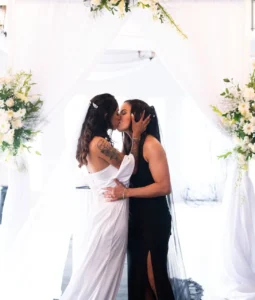
South Africa’s 2026 Women’s Africa Cup of Nations opener against Tanzania on Monday, July 27, made history as married couple Robyn Moodaly and Gabriela Salgado played together for Banyana Banyana.
Their appearance marked the first time a married couple had featured in the same match in WAFCON history.
The Women’s Africa Cup of Nations, Africa’s top women’s football tournament organised by the Confederation of African Football, began in 1991 and has since grown into the continent’s biggest women’s football championship.

According to Leagues Reporter, which shared a picture of the pair, Moodaly and Salgado are regular South Africa internationals and among the country’s most recognisable women footballers. They have also openly shared aspects of their relationship with fans.
Both players have represented Banyana Banyana at major international tournaments and remain important members of the reigning African champions as they pursue another successful WAFCON campaign.
Moodaly, an attacking midfielder, is known for her creativity and technical ability. Salgado is a forward who has represented South Africa at several major tournaments.
Salgado was born in Johannesburg, Gauteng, to a Portuguese father and Lebanese mother. She received her first South Africa call-up on January 22, 2017, but remained an unused substitute against France.
She later joined the senior women’s squad for the 2020 COSAFA Women’s Championship and scored the winning goal in the 66th minute of the final as South Africa secured their seventh COSAFA title.
On July 22, 2025, Salgado fractured the mid-shaft of her left leg during the semi-final against Nigeria, ruling her out for the rest of the year.

The married couple have both been part of South Africa’s recent generation competing at the highest level of women’s football. Moodaly plays for Mamelodi Sundowns Ladies, while Salgado represents Tigres UANL Femenil in Mexico.
Their WAFCON appearance has drawn widespread attention and is being celebrated as a landmark for African women’s football, while also highlighting the growing visibility of LGBTQ+ athletes in the women’s game.
