
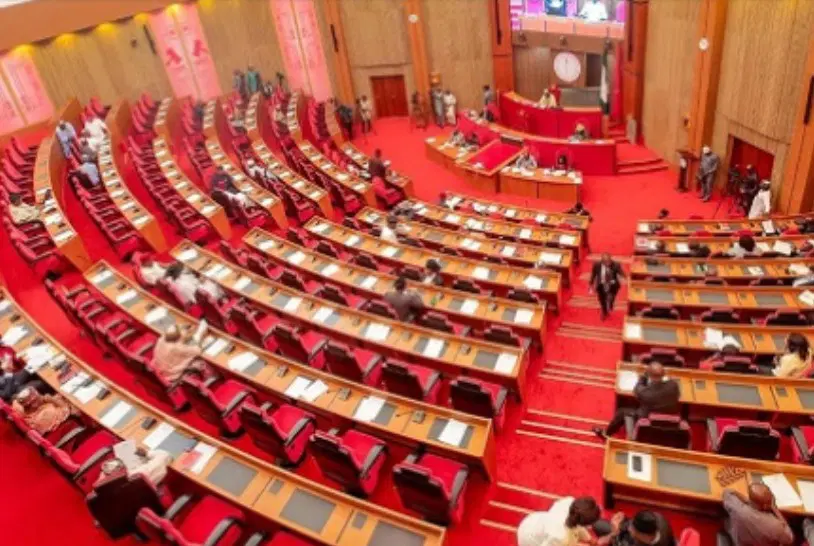
The Senate has advanced a bill seeking to make emergency medical treatment compulsory in all public and private hospitals across Nigeria. The proposed law recommends up to six months in prison or a ₦300,000 fine for anyone found guilty of refusing emergency care.
Sponsored by Senator Abdulaziz Musa Yar’Adua (APC, Katsina Central), the bill seeks to amend the National Health Act, 2014, by introducing clear rules for emergency treatment and patient referrals.
The proposed legislation, titled “A Bill for an Act to Amend the National Health Act, 2014 to Provide for Emergency Medical Treatment Standards and Referral Protocols in Healthcare Facilities; and for Related Matters, 2026” (SB. 759), passed second reading and was referred to the Senate Committee on Health (Secondary and Tertiary). The committee has four weeks to submit its report.
Under the bill, hospitals and healthcare workers must not deny anyone emergency treatment for any reason. Life-saving procedures, including CPR, airway support and bleeding control, must begin immediately when a life-threatening condition is identified.
Hospitals would also be required to assess patients within 15 minutes and begin basic stabilisation within 30 minutes. These measures include oxygen, intravenous fluids, pain relief and initial tests.
Patients requiring admission must be given beds within two hours, depending on availability. Where no bed is available, hospitals must stabilise them and arrange transfers to other facilities.
Referral arrangements must begin within two hours, while transfers should be completed within three hours of arrival, except when circumstances beyond the hospital’s control prevent this. Ambulances or alternative transport must be arranged within 30 minutes of a referral decision.
The bill also proposes compulsory emergency care training for healthcare workers, with recertification every 18 months or less. The Medical and Dental Council of Nigeria and the Nursing and Midwifery Council of Nigeria would jointly develop a national emergency care curriculum.
However, healthcare workers would be protected from punishment where a lack of resources prevents compliance, provided they document the challenges and follow the required referral procedures.
Leading the debate, Yar’Adua said the amendment would address major weaknesses in Nigeria’s healthcare system and ensure that everyone receives urgent medical attention regardless of wealth, status, influence or location.
He blamed preventable deaths partly on the absence of clear and enforceable timelines for assessing and treating emergency patients. He also noted that Nigeria accounts for about 10 per cent of global maternal deaths, linking part of the problem to delays in emergency obstetric care.
Yar’Adua said the bill would improve coordination between primary, secondary and tertiary hospitals, ensure patients are stabilised before transfers and protect workers acting in good faith when resources are limited. However, it would hold those guilty of deliberate negligence accountable.
He also said the proposal follows international practices in Ghana, South Africa, Kenya, the United Kingdom and the United States.
Supporting the bill, Senate Whip Mohammed Monguno (APC, Borno North) said it would help reduce deaths from road accidents and maternal emergencies. He criticised hospitals that neglect emergency patients and said the proposed law would introduce criminal responsibility for such conduct.
Senator Diket Plang (Plateau Central) also backed the proposal, saying it would improve emergency admissions and referrals, particularly in rural areas where childbirth complications often require transfers to bigger hospitals. He stressed that patients must be stabilised before transportation.
However, Senator Francis Faduyile (APC, Ondo South) warned against punishing healthcare workers without first fixing poor facilities, staff shortages and inadequate equipment.
He questioned how doctors attending to several patients could face criminal charges when another emergency case arrives. He also raised concerns about poor funding and private hospitals providing emergency services without reimbursement.
Faduyile argued that Nigeria needs a wider review of the National Health Act rather than focusing mainly on punishment.
Senate Minority Leader Abba Moro (PDP, Benue South) said the debate had exposed several gaps that required attention. He expressed hope that the committee stage and public hearing would allow healthcare workers and other stakeholders to contribute.
Citing experiences in Mexico, where emergency responders and ambulances reportedly attend to accident victims promptly, Moro condemned hospitals that demand police reports before treating emergency patients. He insisted that saving lives must come first.
Senate President Godswill Akpabio said the debate had brought important healthcare challenges to light. He urged lawmakers to support the bill, adding that its shortcomings could be addressed through further discussions and consultations.
Akpabio also stressed that the Federal Government, state governments and local government authorities must work together to provide the facilities and resources needed to improve healthcare delivery.
