
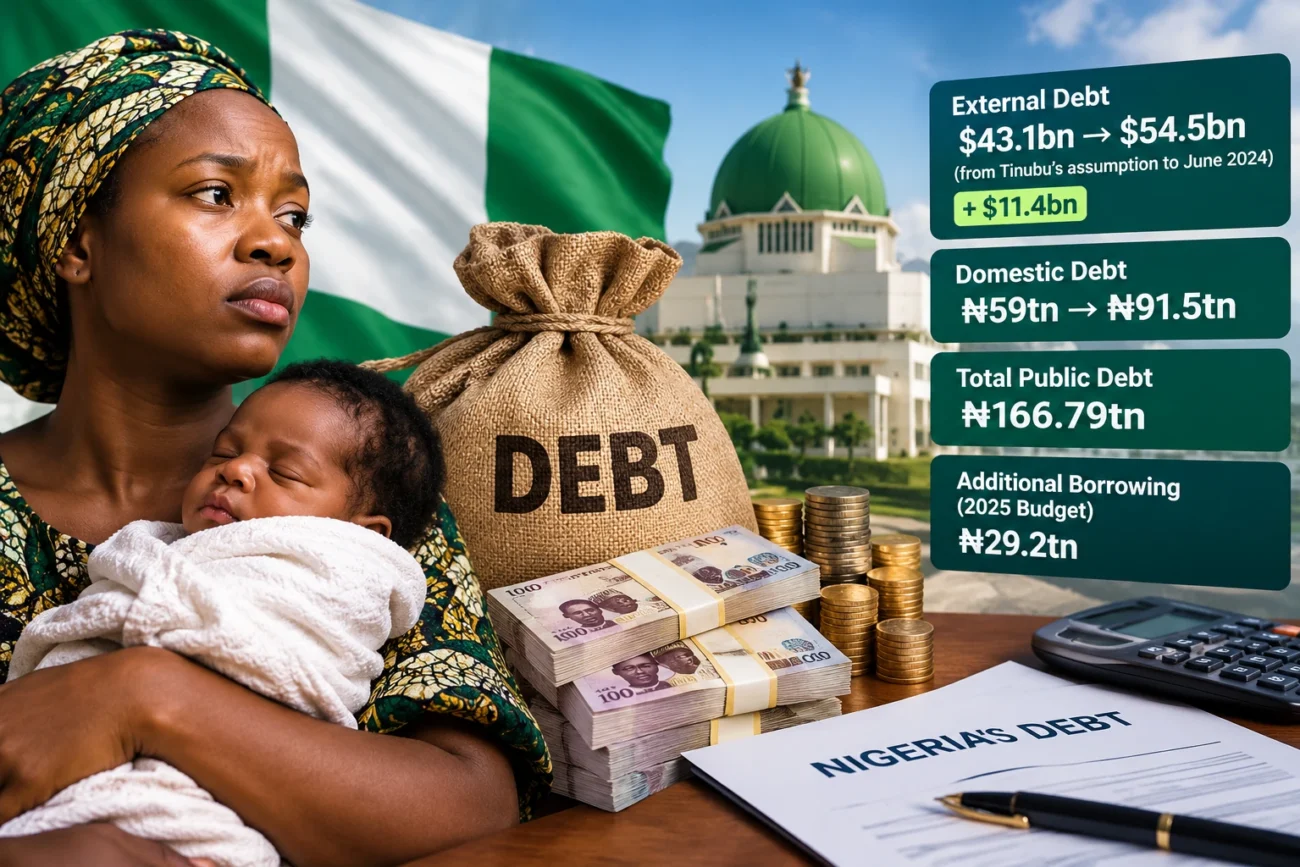
Every Nigerian, including newborn babies, now carries an estimated debt burden of about ₦700,000, according to Tolulope, a presenter with Nairametrics.
Tolulope, while discussing Nigeria’s rising debt profile, said the country’s external debt increased from about $43.1 billion when President Bola Ahmed Tinubu took office to roughly $54.5 billion by June 2024. That represents an increase of around $11.4 billion.
She added that domestic debt rose from about ₦59 trillion to ₦91.5 trillion, pushing Nigeria’s total public debt to ₦166.79 trillion.
The Federal Government also projected borrowing another ₦29.2 trillion under the 2025 budget, she said.
The government has said the borrowed funds are mainly being used for economic reforms, infrastructure and other development projects.
But Tolulope said the rising debt raises concerns about its effect on ordinary Nigerians, especially if debt servicing starts putting pressure on government spending, taxes and the wider economy.
She noted that borrowing can fund roads, electricity and other projects. However, the key issue is whether the money creates enough economic growth, jobs, infrastructure and government revenue to support the added debt.
“The real question is not simply whether Nigeria’s debt has increased, but whether the borrowed funds are producing enough economic growth, jobs, infrastructure, and government revenue to justify the additional debt burden,” she said.
