
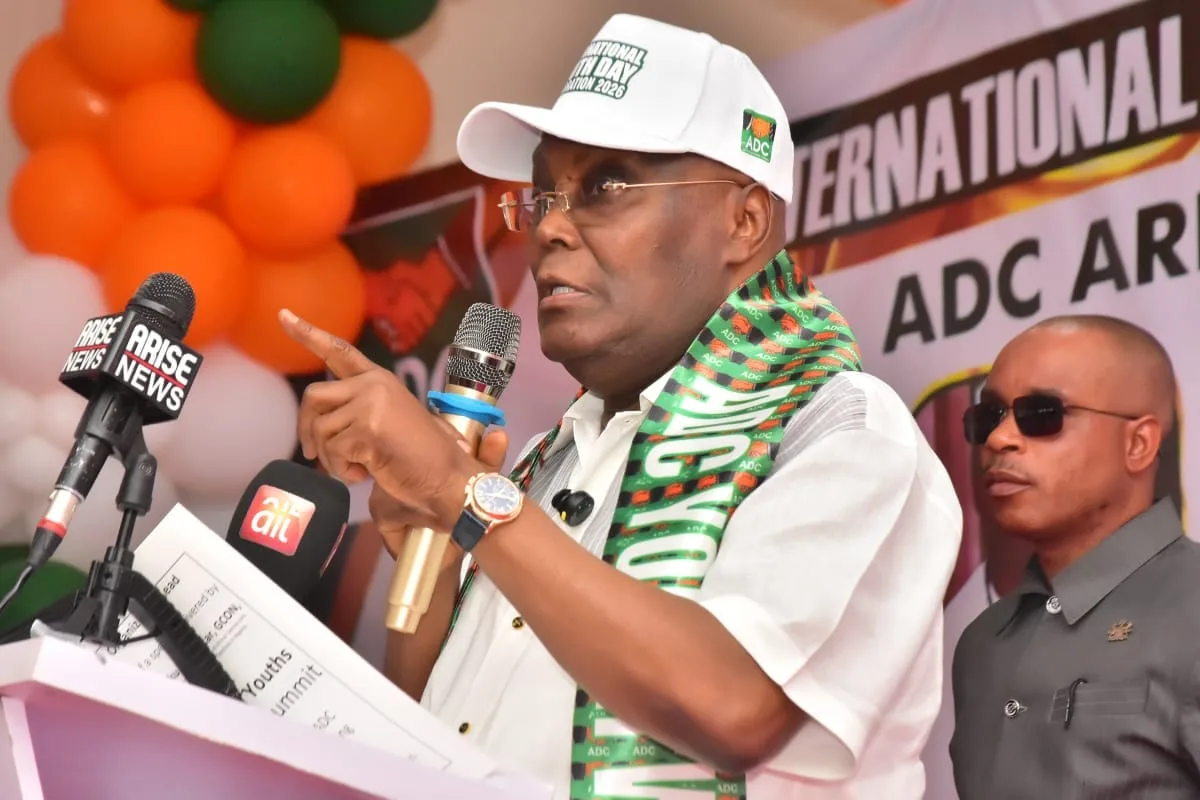
Former Vice-President Atiku Abubakar has questioned how long Nigerians will be expected to cope with the country’s rising cost of living, linking the crisis to worsening child malnutrition.
In a statement by his Senior Special Assistant on Public Communication, Phrank Shaibu, Atiku said 41.1 per cent of children under five are stunted, while 19.2 per cent are severely stunted. In the North-West, stunting stands at 58.2 per cent.
Nearly two million children are also said to have severe acute malnutrition, with only about two in 10 receiving treatment.
“This is the most heartbreaking face of the cost-of-living crisis. Behind every statistic is a Nigerian mother struggling to decide what her children can eat, how much they can eat and how often they can eat.”
“A child does not understand inflation figures. A child only knows whether there is food on the table.
“When nutritious food moves beyond the reach of millions of families, the consequences eventually appear in the bodies of our children. Today, the country is being confronted with figures that should shock the conscience of every leader,” he said.
Atiku also cited food inflation of 19.57 per cent and said high energy and transport costs continue to squeeze families.
“When fuel becomes expensive, transporting tomatoes from the farm becomes expensive. Taking rice to the market becomes expensive. Moving children to school becomes expensive. Running the neighbourhood grinding machine becomes expensive. Powering the small shop becomes expensive.
“And eventually, the additional cost arrives at the dinner table. That is why I refuse to accept an economic philosophy in which government simply watches prices rise and tells struggling citizens to endure.”
He said his petroleum proposal would support domestically refined crude, with the scheme capped, budgeted and independently audited.
“My position is straightforward: support what Nigeria produces and refines, lower domestic production costs, and ensure that the benefit reaches the Nigerian consumer.
“This is not an import subsidy. If you do not refine in Nigeria, you do not qualify. The subsidy follows the barrel refined in Nigeria. Produce here. Refine here. Create jobs here. Pay less here.”
Atiku said the wider plan would target energy, transport and production costs while increasing household purchasing power.
“Economic policy must ultimately answer a very simple question: Can the ordinary Nigerian afford to live?
“We cannot build a strong country on the bodies of hungry children. We cannot celebrate economic statistics while mothers are cutting meals and children are denied the nutrition they require to grow.
“My objective is clear: lower the cost of energy, lower transportation and production costs, strengthen Nigerian production, restore purchasing power and give families breathing room again. I will make life affordable again.”
