
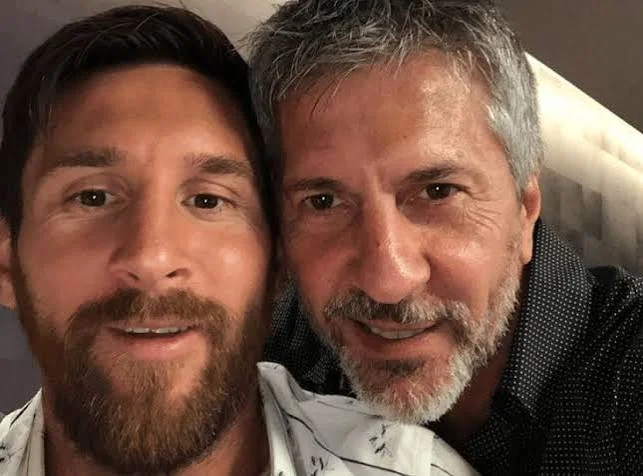
Jorge Messi, the father and long-time representative of Argentina captain Lionel Messi, has died at 68, MARCA reported on Saturday, citing Argentine news outlet Infobae.
Jorge reportedly died around 10pm on Friday at a sanatorium in Rosario, Argentina, after a prolonged illness.
Jorge was married to Celia Cuccittini, with whom he had four children: Lionel, Rodrigo, Matias and Maria Sol. He played a major role in Lionel’s journey from Newell’s Old Boys to global football stardom.
He helped secure growth hormone treatment for Lionel after efforts to get the treatment in Argentina failed. He then arranged his 13-year-old son’s move to Barcelona.
Jorge stayed with Lionel in Spain during the early and difficult years of his career while the rest of the family remained in Rosario.
Recalling that period in 2007, Messi said his father asked whether he wanted to continue chasing his dream in Spain or return home.
“My old man was always by my side. We lived through many bad moments,” Messi recalled.
He added, “My old man asked me, what do you want to do, do you want to continue or shall we go back? I wanted to continue and he stayed with me.”
Jorge later managed Lionel’s affairs, including deals with major global brands, while largely staying out of the spotlight.
“You know very well that we have gone through many good and not-so-good moments,” Jorge said.
He said those experiences strengthened the family and described Lionel as “an excellent person”.
Jorge’s health drew attention during the 2026 World Cup after Messi became emotional following Argentina’s opening match. After scoring a hat-trick, he said, “It is for a reason completely unrelated to sport. I had some difficult, complicated days.”
Asked about the family situation, Messi said, “The truth is, more than anything, because of the family.”
The family later said Jorge was “under medical supervision, recovering and progressing favourably within the condition he presents”.
Jorge, a trained chemical technician, worked at Argentine steel company Acindar from the 1980s and eventually became a manager. He also played as a midfielder in Newell’s youth system before leaving football after being called up for military service.
His death marks the loss of a man who stayed largely behind the scenes but played a central role in Lionel Messi’s remarkable career.
