
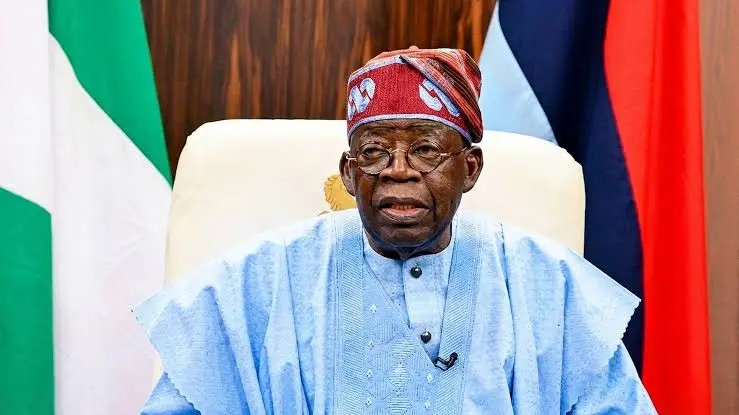
The publication of President Bola Ahmed Tinubu’s nomination documents for the 2027 presidential election by the Independent National Electoral Commission (INEC) has brought fresh attention to the controversy over his educational credentials, which featured during the 2023 election court cases.
INEC said it does not verify academic certificates or other credentials submitted by candidates before making them public for scrutiny.
The documents released on Saturday listed Tinubu’s 1979 Bachelor of Science in Business Administration from Chicago State University. However, the sections for his primary and secondary school qualifications were left blank. He attached copies of his university degree and National Youth Service Corps (NYSC) certificate.
The omission has revived debate over the legal battle that followed the 2023 presidential election, when Atiku Abubakar alleged Tinubu submitted a forged Chicago State University diploma to INEC. Although the university confirmed Tinubu graduated in 1979, the issue became a major part of the post-election court case. Both the Presidential Election Petition Court and the Supreme Court upheld Tinubu’s election.
Lawyers and opposition parties questioned the omission, with some arguing that presidential candidates must meet the constitutional requirement of secondary school education. Others insisted the missing information raises legal and public concerns.
However, another Senior Advocate of Nigeria, Taiye Oniyide, said the omission has no legal effect because Tinubu’s university qualification exceeds the constitutional requirement.
INEC maintained that its duty under the Electoral Act 2026 is only to publish candidates’ documents for public scrutiny, while disputes over their authenticity are for the courts to decide.
The ADC and NDC criticised the omission, while the Labour Party said it does not amount to a legal violation. Atiku Abubakar also called for greater transparency.
