
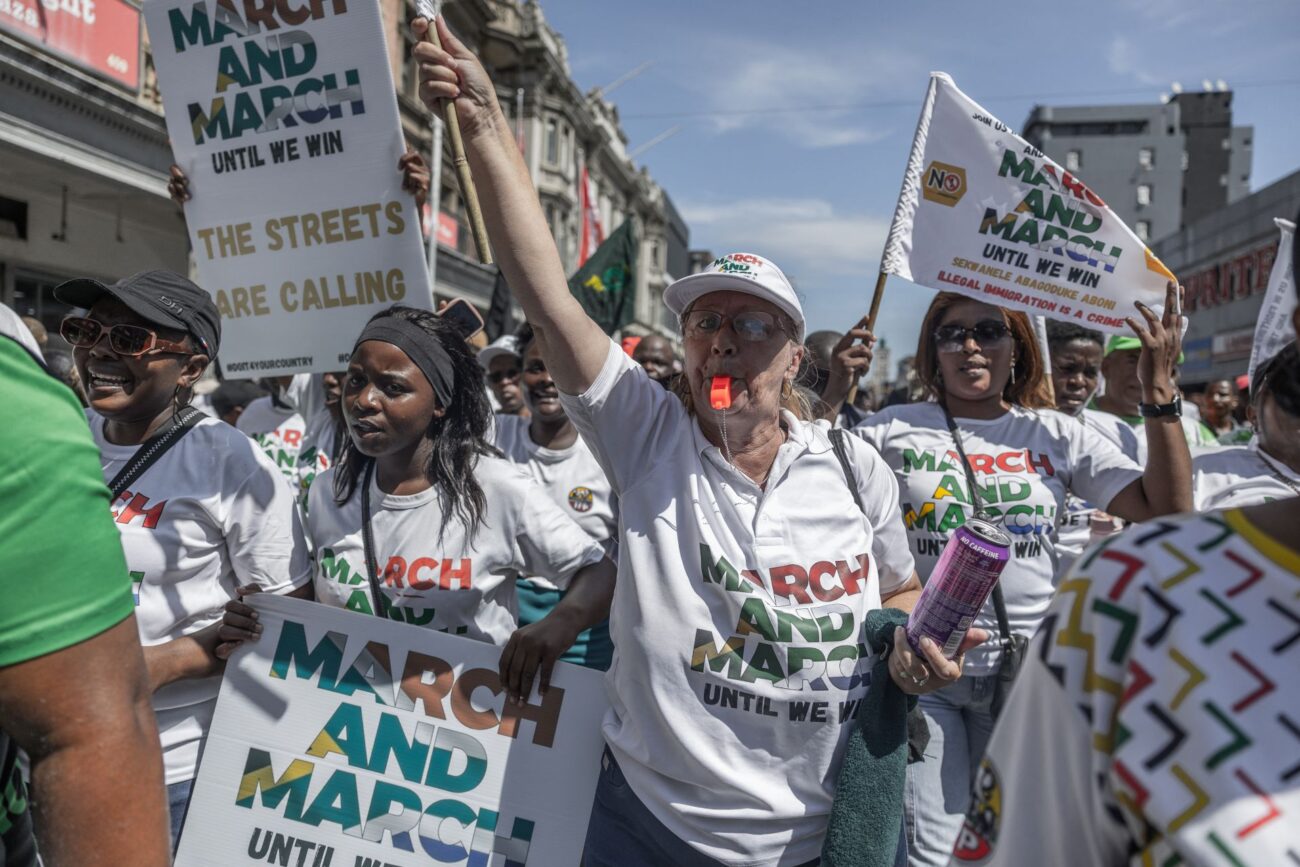
Tensions have risen again in South Africa after members of the March and March movement staged a protest in Pretoria on Wednesday, demanding that the government close its borders to Nigerians and stop them from entering the country.
The protesters accused Nigerians of drug trafficking and worsening social problems in South African communities. The demonstration was led by the group’s leader, Jacinta Ngobese-Zuma, who confronted Nigerian residents in Sunnyside, a Pretoria suburb known for its large Nigerian community and often called ‘Little Lagos’.
She challenged Nigerians to explain why the area was given the name Lagos.
“I am being told here that we’ve entered Sunnyside, the home of Nigerians. I am inviting Nigerians to come out, let’s talk to each other. We want to know who gave you this place and called it Nigeria. Who gave you permission to call this place Lagos or whatever you call it?” she asked.
Ngobese-Zuma also described the arrangement as “not sustainable and not feasible”, claiming migrants were putting pressure on public resources.
The group plans to submit demands to the Department of Home Affairs, including tougher immigration rules, restrictions on refugee admissions and faster deportation of undocumented foreigners.
Its lawyer, Xolani Zuma, also called for Nigerians to be banned from entering South Africa.
“The state must ban Nigerians from South Africa. They must ban Nigerians until they stop selling drugs to our people. The rest of Africa, we are fine, but we do not want Nigerians in South Africa anymore. That is what we are saying,” he declared.
The protesters also want South Africa to withdraw from the 1951 UN Refugee Convention, arguing that its obligations are no longer sustainable.
The protest comes amid growing diplomatic tensions over xenophobic attacks and the safety of Nigerians in South Africa.
Last week, Nigeria’s High Commissioner, Femi Fani-Kayode, had a disagreement with the South African Presidency after his prepared speech was excluded during his presentation of credentials. He described the omission as disrespectful but later said the matter was resolved after President Cyril Ramaphosa intervened and the Department of International Relations and Cooperation invited him.
Fani-Kayode said he had started addressing issues affecting Nigerians. He described those behind xenophobic attacks as a tiny minority, insisting most South Africans were decent and welcoming.
He expressed confidence that both countries could resolve their differences and maintain diplomatic ties. However, he warned that Nigeria’s patience was running thin over repeated attacks on its citizens and insisted the country would not abandon them.
