
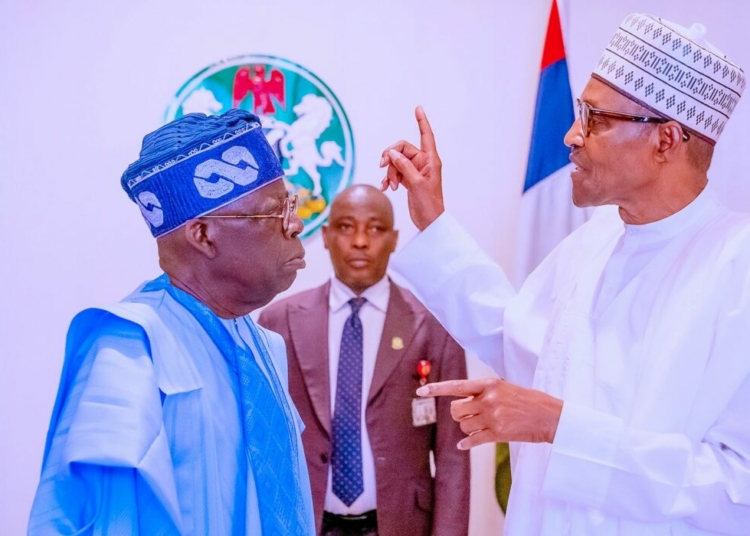
Former President Muhammadu Buhari reportedly resisted pressure from political allies who wanted President Bola Tinubu to succeed him because he viewed Tinubu’s presidency as harmful to Nigeria.
Hakeem Baba-Ahmed, National Chairman of the Peoples Redemption Party (PRP), made the claim at a summit organised by the Northern Elders Forum.
In a video shared on Symfoni’s YouTube channel, Baba-Ahmed criticised Tinubu’s performance and warned Nigerians against allowing his re-election ambition to outweigh the country’s interests.
“Even Buhari saw Tinubu as bad news for this country. In fairness to him, he is not around him. Buhari resisted some people who insisted it had to be Tinubu,” he said.
He also questioned Tinubu’s “Emilokan” slogan, which means “it is my turn”, arguing that leading a country of about 250 million people should not be treated as a personal entitlement.
“Nigerians ought to have known there was something wrong the day Tinubu said ‘It’s my turn’. Maybe we missed it,” he said.
Baba-Ahmed accused the administration of worsening the country’s situation and failing on key measures of national performance. He also faulted Tinubu for not personally asking Nigerians for another term, alleging that he relied on political allies to promote his re-election bid.
He criticised Northern governors for failing to adequately highlight the region’s economic difficulties and public dissatisfaction.
Despite his concerns, he expressed confidence that Nigeria would survive the current hardship, pointing to its resilience during past crises.
Regarding the 2027 election, Baba-Ahmed said opposition parties were working to form a coalition to challenge Tinubu. He urged Nigerians opposed to the president’s re-election to support whoever emerges as its candidate.
Tinubu won the 2023 election under the APC, succeeding Buhari after eight years of APC-led government. His administration removed the petrol subsidy and changed foreign-exchange management. Supporters defend the reforms as necessary to stabilise public finances, despite rising living costs and concerns over household purchasing power.
