
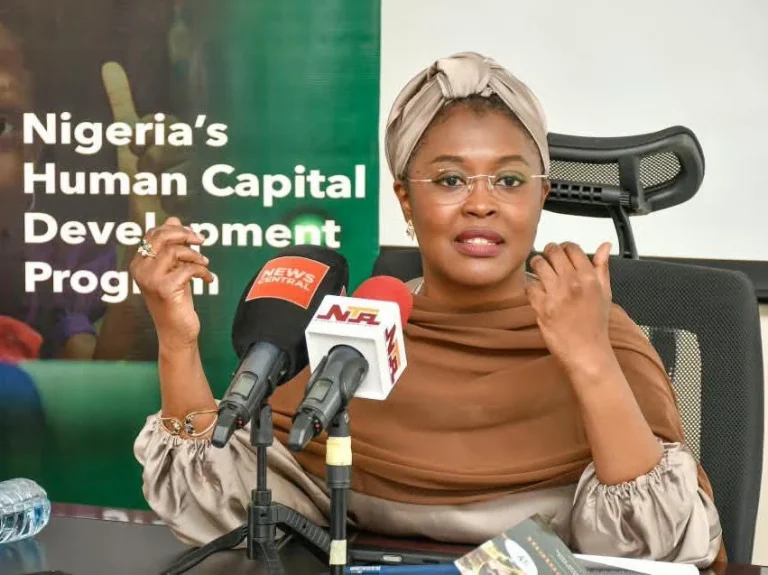
About 70 per cent of Nigerian children below age 10 cannot read and understand a simple sentence, the National Human Capital Development Programme has said, warning of a serious learning crisis that could affect the country’s future workforce.
National Coordinator of Human Capital Development 2.0 and Special Adviser to the President on the National Economic Council and Climate Change, Rukaiya el-Rufai, disclosed this in Abuja on Monday.
She said having children in school does not mean they are gaining the literacy and numeracy skills needed to work productively.
“The one that worries me and scares me is that learning poverty is so high. It’s about 70 per cent. So the numeracy and the English skills from 10 to 12, in fact, the World Bank puts it at 85 per cent. So it’s not that even the kids that are in school, what they’re learning is not sufficient,” she said.
El-Rufai said poor basic education also limits access to advanced industrial jobs, citing the Dangote Refinery.
“I know this kind of thing, you can’t even, it’s just like when Dangote was building the refinery, they couldn’t train our welders because to achieve that precision you need geometry. You need geometry,” she said.
She said HCD 2.0 is targeting health, education, skills and livelihoods, with six key indicators including learning poverty, out-of-school children and youth not in employment, education or training.
The programme is being implemented through the National Economic Council, with states developing plans based on their different challenges. Data will also guide where resources are most needed.
Ms Doosuur Zasha, the programme’s Director of Advocacy and Communications, urged the media to help track progress and hold governments accountable.
“That’s the core of what we’re doing here. At the core of it, we’re trying to see how Nigerians can access quality healthcare, whether children are learning, and whether young people and adults have the skills and opportunities to earn a decent livelihood, and if people that face barriers can actually have full participation in the economy,” Zasha said.
